How Your Customer’s Bad Day Becomes Your Lost Sale
Jessie George
September 5, 2025
As a business owner, there will always be things out of our control. But when you practice smart communication, you can still make the most of each interaction.
A tale of two sales
Max and Mandy are the same age, work in similar fields and make a similar salary. Both want to buy a new TV and plan to visit your electronics store after work. On the surface, you should be able to sell a TV to both customers with ease, but hidden factors are at play.
As a skilled salesperson, you give both customers the same tried-and-true pitch. Mandy bites and buys her desired TV, but Max goes home empty-handed.
Both customers have the same background and buying power. They came to your store on the same day with the same intent to purchase. You even gave them the same spiel, so why did only one buy?
The difference? Their state of mind. When Mandy visited, she was in a great mood. She’d had a positive review at work and was eager to get her hands on the TV she’d been saving for. Max, however, received some difficult personal news that afternoon. He was feeling down and by the time he reached your store, his mind was somewhere else. Despite his initial excitement about the purchase, he no longer felt like buying a big-ticket item.
Emotional Contagion – It’s really true!
Can mood really influence purchase intent that much? Consider this: Have you ever cancelled plans after an argument with your partner? Have you ever decided to treat yourself after a successful project launch at work?
Good or bad, our moods are directly tied to our purchase intentions. However, everyone reacts to situations differently. Some people buy new clothes when they’re feeling sad, while others only impulse buy after receiving a nice compliment. Regardless of individual reactions, as a business owner you need to be aware of your customers’ emotions or risk losing the sale.
You may not be able to control how someone feels when they enter your store, but you can help them take a deep breath and RESET. Not only will it boost your sales, but you’ll likely see an increase in customer retention.
How to RESET your customers’ bad mood
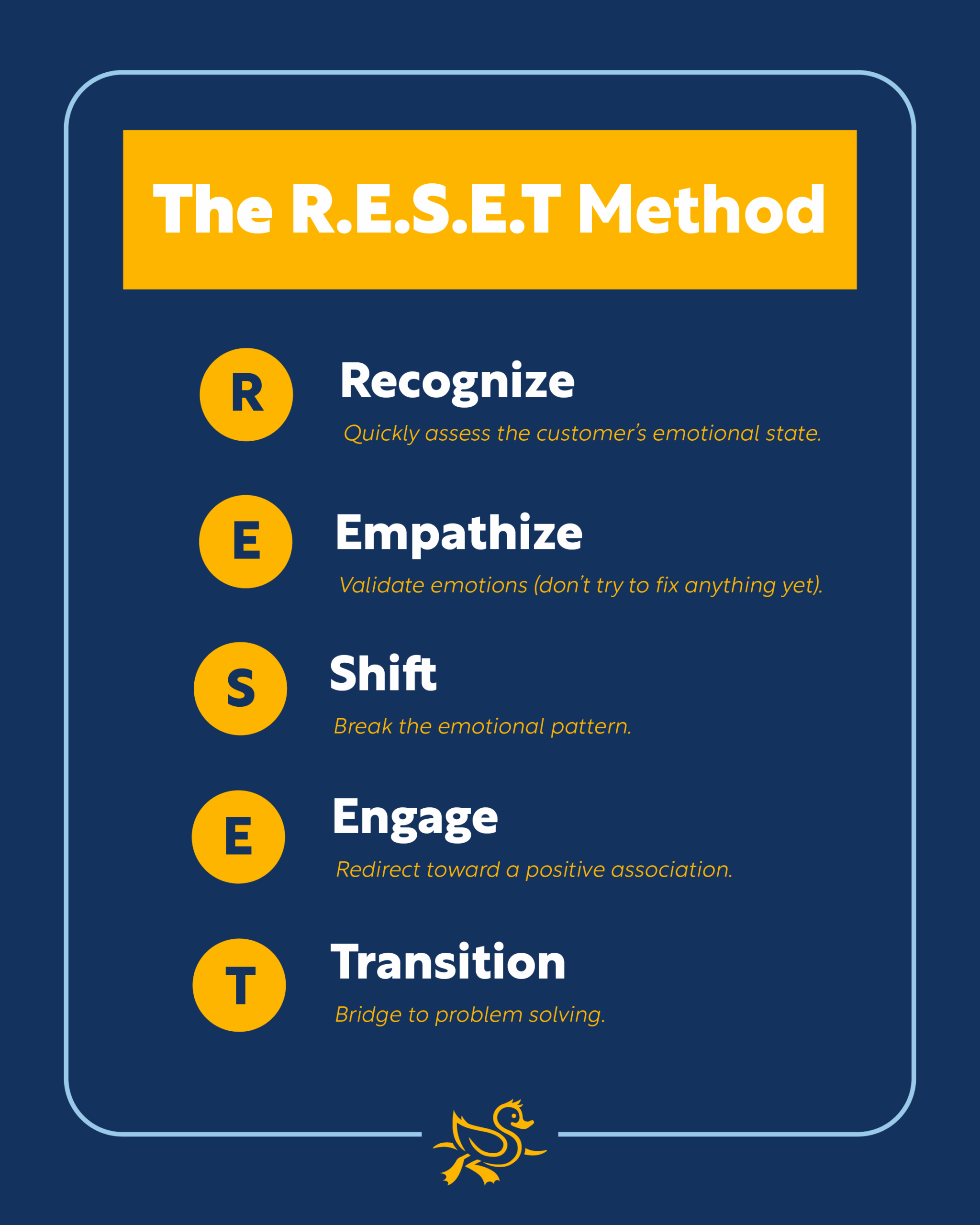
If you’ve ever been in a bad mood, you know it takes more than quippy remarks and a smile to snap out of it. Instead, try the RESET Method: Recognize, Empathize, Shift, Engage and Transition.
1. Recognize: Quickly assess the customer’s emotional state.
- “You look like you’re on a mission!”
- “I see you have a lot on your plate…”
- “Busy day?”
2. Empathize: Validate emotions (don’t try to fix anything yet).
- “That sounds incredibly frustrating.”
- “I’d feel the same way in your shoes.”
- “You’re not alone. Plenty of people run into this.”
3. Shift: Break the emotional pattern.
- “Can I grab you water or coffee while we look into this?”
- “Let’s try something new.”
- “What if we zoomed out for a second?”
4. Engage: Redirect toward a positive association.
- “Let me show you what worked for me when I had the same problem.”
- “What would your perfect scenario look like?”
- “It sounds like what you’re really after is peace of mind.”
5. Transition: Bridge to problem solving.
- “We have plenty of options. Let’s find one that fits your life.”
- “You deserve a tool that’s actually helpful. We can help with that!”
- “Here’s a solution that might feel more in sync with your needs.”
Positive Sentiment Catchphrases
You probably find that customers frequently fall into a couple of the same negative moods. Here are our tried and true catchphrases for diffusing the most common ones.
Anxiety: “Let me take care of that for you.”
Lack of Trust: “Honestly, here’s what I would do if I were in your situation.”
Frustration: “I can see why that would be upsetting.”
Overwhelm: “Let’s break this down into simple steps.”
Lack of Confidence: “You’re asking exactly the right questions.”
Other Considerations
If regular day-to-day events can affect a shopper’s mood, major life events certainly can too. At any given time, your customers are feeling a myriad of emotions that have nothing to do with your product or company.
- Is there a major holiday approaching?
- Have there been any economic changes?
- Could something big be happening in their personal life?
Endless factors can influence our moods. As a business owner, it’s your job to navigate the challenges in your customer’s life and provide a safe space to RESET and focus on the benefits you can offer them. Otherwise, you might lose sales to factors beyond your control.
What You Say and How You Say It
Companies face an uphill battle earning customer loyalty. Out of thousands of brands, why should customers choose yours? In your mind, there might be lots of reasons to pick your company over competitors, but to your customer there’s only one that really matters: you make them feel better. After all, who doesn’t want to shop at a store that makes them happy?
Pssst: Enjoyed this article? Download our handy one-page guide!