Taking a Bite of the AI Sandwich
Jessie George
January 8, 2026
Artificial intelligence isn’t science fiction anymore and it’s become impossible to ignore.
Whether you’re curious, cautious, or somewhere in between, here’s what you need to know about AI and how it’s changing the marketing landscape.
Are robots taking over?
Let’s clear one thing up from the start. The AI of today are not free thinking agents. What most of us interact with are actually considered Large Language Models (LLMs), which work by breaking language into small pieces and predicting what should come next based on patterns they’ve observed. It’s a bit like autocomplete on your phone, except vastly more complex and capable of generating entire documents, analyzing data, and even writing code. All that to say, you can rest easy knowing that ChatGPT will not rise up and take over the human race. At least not yet.
What’s AI Good for Anyways?
The major players you’ve probably heard about include ChatGPT (from OpenAI), Claude (from Anthropic), and Gemini (from Google). Each has its strengths:
- ChatGPT is widely accessible and versatile
- Claude excels at nuanced writing and analysis
- Gemini integrates seamlessly with Google’s ecosystem and produces hyper realistic images
There are also specialized tools for research, like Perplexity, and productivity tasks, like Microsoft’s Copilot.
Wondering where to start using AI? The sweet spot is in tasks that are time-consuming, but don’t require critical decision-making.
Personal uses might include drafting emails, planning travel itineraries, or making shopping lists. Need a quick recipe based on what’s in your fridge? AI’s got you covered.
Professionally, AI excels at initial drafts, research summaries, brainstorming sessions, and data analysis. It can help build a social media schedule, generate headline options, or transcribe and summarize meetings. At Fuzzy Duck, we use AI to speed up certain processes, but never as a replacement for human creativity and strategic thinking.
For education, AI can be a powerful tutoring tool or study aid, though students should always understand concepts themselves rather than relying on AI for answers.
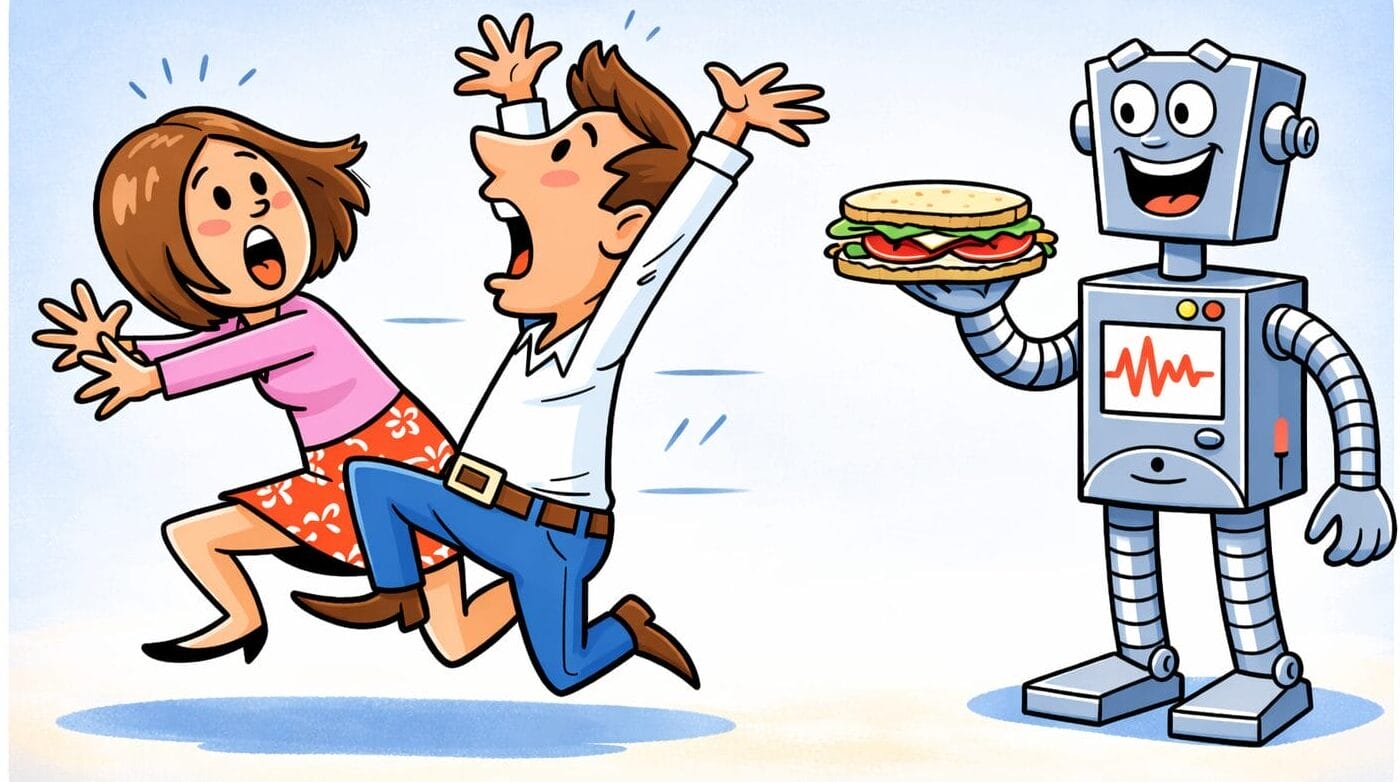
The best approach? We prefer the “AI Sandwich Method.” Start with your own thinking for a rough draft. Even if it’s a bunch of jumbled thoughts, get anything you want to say on the page. Then use AI to help clean up the structure and fine tune clarity. Finally, you review and refine the output yourself, checking for tone, wording, spelling, and consistency. This keeps you in control and maintains human oversight at every stage, while leveraging AI’s efficiency.
What Can’t AI do?
AI isn’t magic, and it’s crucial to understand its limitations.
As we discussed earlier, these AI tools are not free-thinkers. They scour the internet and produce results based on existing patterns. Now, we all know there’s a lot of misinformation online. Anyone can write a blog, but that doesn’t make the content true. The problem is that AI can’t tell the difference: they’re pattern-matching machines, not thinking entities.
This results in what the industry calls “hallucinations.” AI can gather inaccurate information and report it as fact because it can’t actually tell the difference. This is why it is crucial to fact check and proofread anything AI shares.
Never use AI for high-stakes decisions without human verification. Medical diagnoses, legal advice, and financial planning all require human expertise and judgment. AI can assist, but it should never decide.
What’s so Bad About AI?
On the surface, AI might seem a little scary, however, most of these fears are unfounded. That said, there are several concerns around its increased usage in our daily lives so let’s go through the major ones.
Privacy is a big one. Many platforms use your inputs to train their models unless you opt out. This means anything you share is stored in their servers. Think about that for a second and evaluate what kind of personal data you want to share with massive tech corporations. Many written works (like novels and academic research) were used to train the models early on but the authors were not compensated or informed of the usage. Legal battles are underway for what compensation looks like in these cases, but it’s a good point of caution if you’re considering using it to proofread anything with copyright potential.
For creative professionals and artists, AI can feel like a threat. When a machine can generate a logo in seconds, what happens to designers? The truth is nuanced. Some jobs will change or disappear. Luckily, history shows us that technology typically transforms work rather than eliminating it entirely. The key is adapting and finding where human creativity adds irreplaceable value.
Lastly, there’s the often unspoken environmental cost. The data centers that house AI servers produce massive electronic waste. They also consume large amounts of water and rely on rare elements and minerals that are often unsustainably mined. Not to mention they use massive amounts of electricity, spurring harmful greenhouse gas emissions.
The Bottom Line
At Fuzzy Duck, talent is one of our core values and developing that talent involves exploring and utilizing new technologies. With that said, we’re not jumping on the AI bandwagon just because it’s trendy. We’re thoughtfully exploring how these tools can help us work smarter and faster while keeping human expertise, judgment, and creativity at the center of everything we do. Our promise is to never deliver fully AI-generated work to our clients. AI is a tool in our process, not the final product. We recommend our clients take the same approach with any AI tools they use.
At the end of the day, marketing isn’t about the tools you use. The most effective marketing comes from understanding your audience and telling your story in a way that resonates. And that will never go out of style.